Say that itemA == itemBitemB == itemC
A good answer might be:
Just one object (and three reference variables, each refering to it.)
The equals() Method
You have previously seen the equals( String ) method of class String.
The equals( String ) method of class String tests if
two Strings contain the same characters.
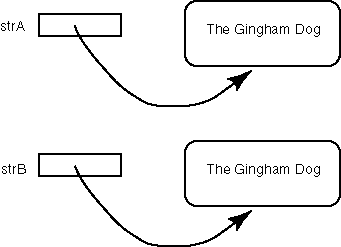
The equals( String ) method DOES look at the contents of objects. It detects "equivalence." The == operator detects "identity". For example,
|
String strA; // first object String strB; // second object strA = new String( "The Gingham Dog" ); strB = new String( "The Gingham Dog" ); if ( strA.equals( strB ) ) System.out.println( "This WILL print."); if ( strA == strB ) System.out.println( "This will NOT print."); |
In this example, there are two objects (each object has its own identity, so ==
reports false).
Each object contains equivalent data (so equals() reports true).
QUESTION 19:
If you made a Xerox© copy of a sheet of paper, you would have two sheets of paper.
- Are the sheets of paper separatate objects?
- Is the first sheet == the second sheet?
- Is the data on each sheet the same as on the other?
- Is the first sheet equals() to the second sheet?