A good answer might be:
- Did the two arrays have to contain the same number of elements?
- NO---the method will work for any length of array.
- Did the two arrays both have to be arrays of int?
- YES---the parameter says to expect an array of int
Picture of the Action
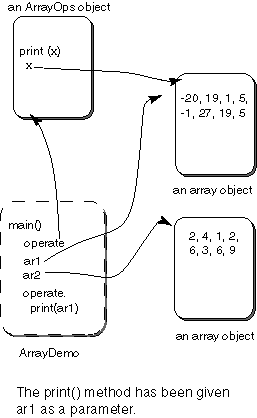
Here is a picture that shows what the executing program looks like just after the first call to the print method.
Several points:
- ArrayDemo is shown in dotted lines because it is a class definition, not an object.
- ArrayDemo's static method main() is being used.
- The variables ar1 and ar2 refer to two array objects.
- The variable operate refers to an ArrayOps object.
- The picture shows what happens when the print() method of operate is called with ar1 as a parameter.
- Just after the call, the formal parameter
xrefers to the same object as does to variable ar1 .
Usually you do not think about things in such excruciating detail. You would think "call a method to print the array" and would write
operate.print( ar1 );
But sometimes you really need to know what is going on.
QUESTION 5:
Does the picture change when the second array is printed?
Click Here after you have answered the question