A good answer might be:
- You should not have to write the same code more than once.
- To maintain consistency between related classes.
Music Video Class
|
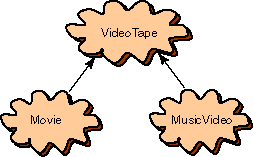
So far the video rental application has two classes: VideoTape and Movie. Say that you wanted to create a new class, MusicVideo that will be like VideoTape but will have two new instance variables: artist (the name of the performer) and category ("R&B", "Pop", "Classical", "Other" ). Both of these will be Strings. The MusicVideo class will need its own constructor and its own show() method. Here is the base class:
class VideoTape
{
  String  title;    // name of the item
  int     length;   // number of minutes
  boolean avail;    // is the tape in the store?

  // constructor
  public VideoTape( String ttl, int lngth )
  {
    title = ttl; length = lngth; avail = true;
  }

  public void show()
  {
    System.out.println( title + ", " + length + " min. available:" + avail );
  }

}
|
The new class will look something like this:
class ______________ extends _________________
{
  String  ______________;     //  the artist
  String  ______________;     //  the music category

  // constructor will go here (skip for now)

  // show method will go here (skip for now)

}
|
QUESTION 14:
Write a definition of the class MusicVideo which extends the parent class Video. For now, leave out the constructor and the show() method.
Click Here after you have answered the question