A good answer might be:
No.
HEX Dump
Some text editors do something special with binary files. The editor in the screen shot shows the bit pattern in each byte of "intData.dat". This is sometimes called a hex dump because it shows bit patterns using two hexadecimal characters per byte. On a Unix system use the "od" command at the command line.
The six zeros at the beginning of the line mean the
the first byte shown is byte zero of the file.
I drew in the red brackets under each integer.
The first variable contained a zero.
The pattern above the first bracket shows the
32-bit pattern that represents zero.
Each "0" in the dump stands for four bits with
value zero.
So the 32-bit pattern for zero is
00000000000000000000000000000000
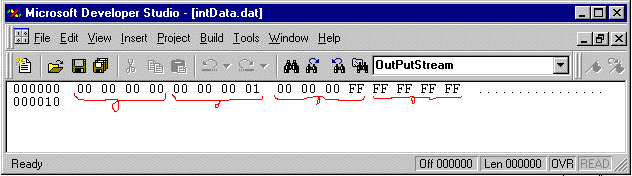
Don't worry about these details; the idea is to show that the file contains bit patterns corresponding to the way integers are represented inside the processor. You will get much more of this stuff in a course in assembly language.
The second group is a 32-bit representation of one. The third group represents 255. The hexadecimal character "F" represents four bits with value one. So the value 255 is represented by 28 zero bits followed by 4 one bits.
QUESTION 6:
The last int held minus one.
What is the 32-bit representation of minus one?